Author note: I published this post last week in a hurry to ‘post something,’ but even as I posted it, it didn’t feel quite right. I had written a reasonable post, but it didn’t feel honest, as I had framed it around work rather than how I actually felt on a more personal level. So, today I unpublished and re-edited, and hopefully the following is a more accurate reflection of what I really wanted to share.
Recently, I went to a kintsugi class to try something new during these dark winter months. I had zero expectations; I didn’t know if I would enjoy the class or be any good at it. What I didn’t expect was to walk away with a lesson I’ve been circling around for years.
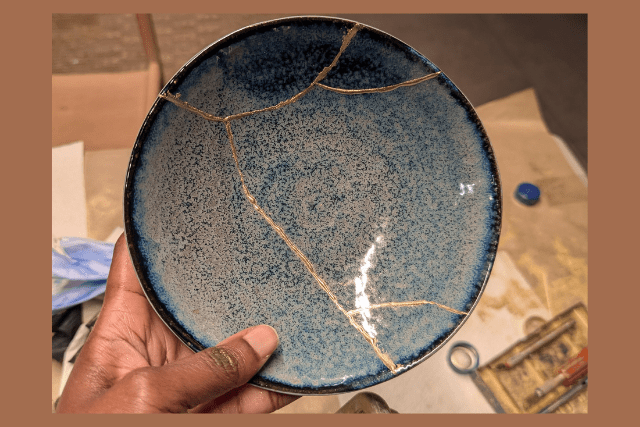
Kintsugi is the Japanese art of repairing broken pottery with gold. The cracks aren’t hidden; they’re highlighted, making the object something new, whole, and more interesting because it’s been broken.
We’re often encouraged to present ourselves as seamless, perfect, whether in our personal lives and/or professional lives. Struggle is acceptable, but once resolved, it’s safely reframed. But kintsugi doesn’t do “seamless” or “perfect” The repair is visible. The break matters.
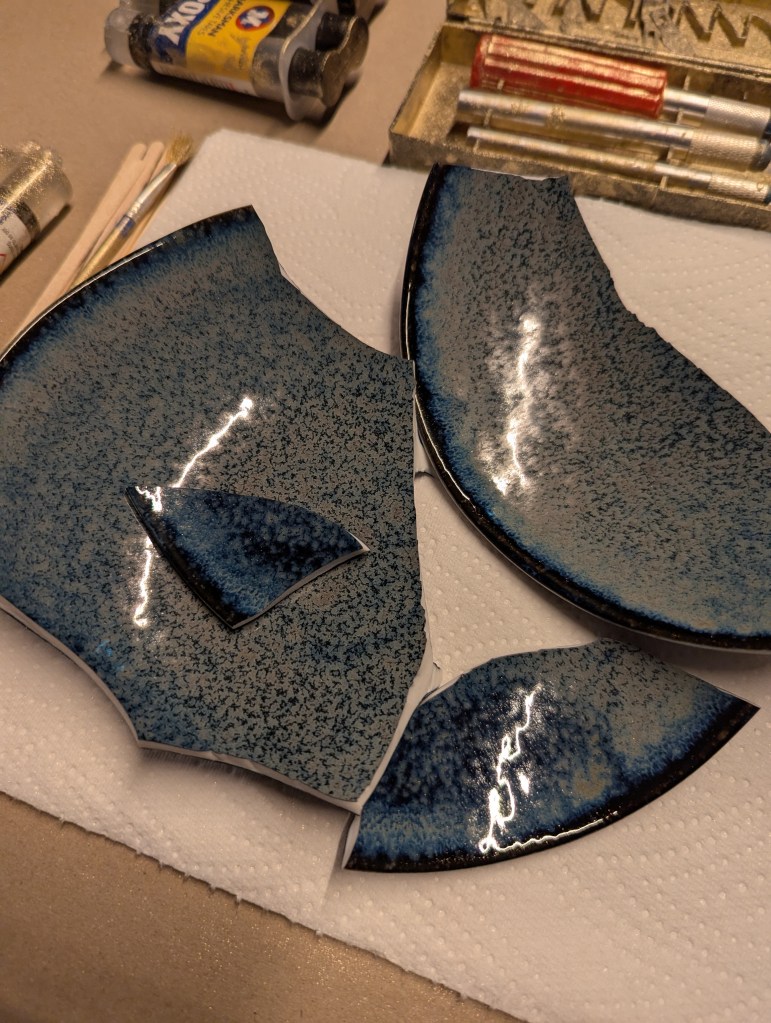
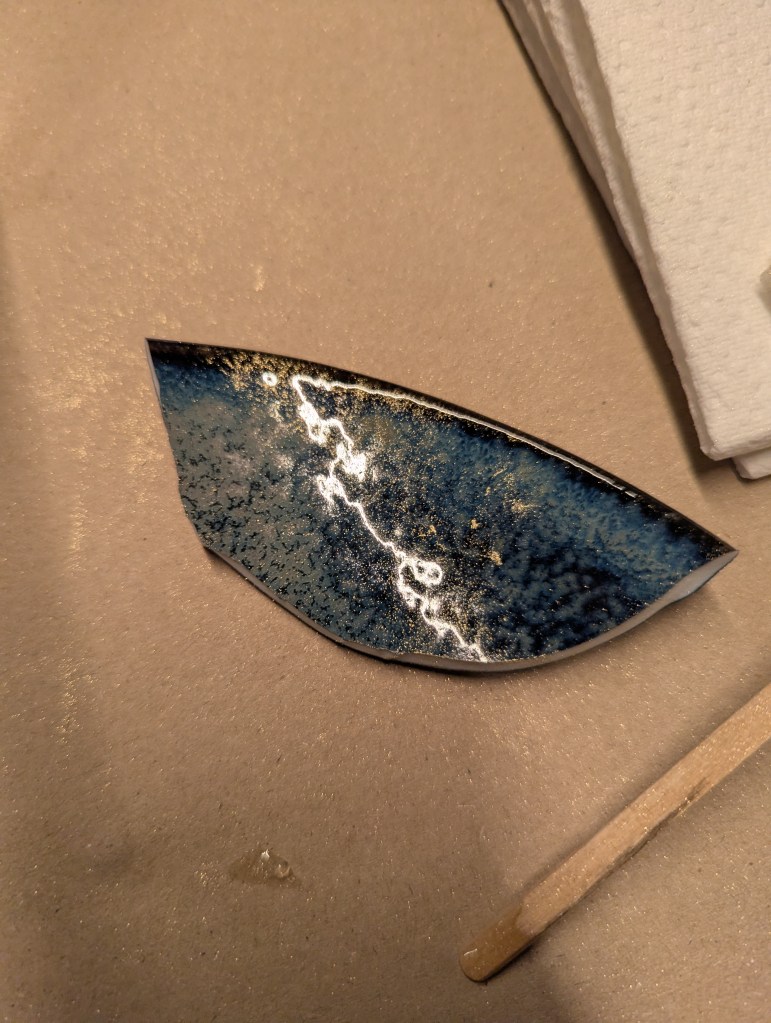
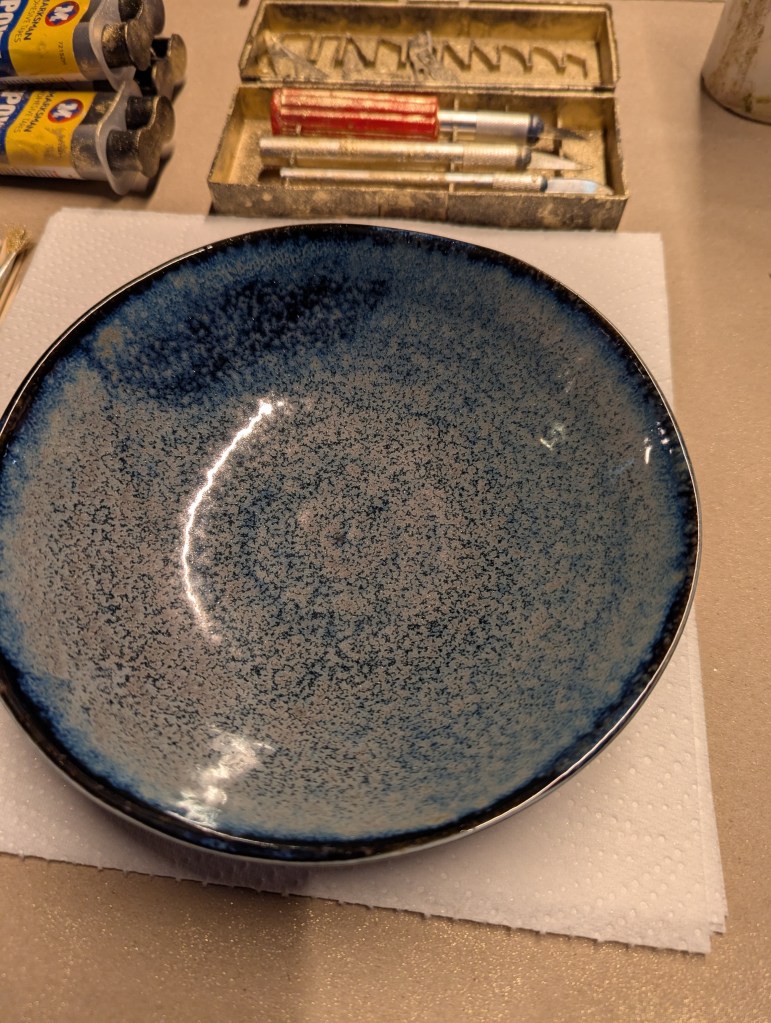
In class, we were presented with an array of bowls to work with. Whether by accident or design, I picked a bowl that was slightly more challenging to work with than the other options. We were instructed to break our bowls into four pieces. I broke mine into five pieces, lost one piece, and, to my slight embarrassment, one of the class instructors had to complete a mini side quest to find it. For one reason or another, this reflected how I’ve been feeling about my own life recently — messy, nonlinear, difficult and requiring far more patience than I allow myself.
But what struck me most in the class was the lack of pressure to get it “right” from the instructors to the craft of kintsugi itself. It didn’t matter that it took me longer to complete my bowl than the two-hour class allowed, or that there were moments when I had to completely redo a process to get it right. The gold lines didn’t need to be neat or uniform. The goal wasn’t perfection — it was care. Attention. Making something whole again.
And as someone who is prone to perfectionism – wanting to get things right (preferably on the first try) – and struggles with that old monster, imposter syndrome – I never seem to feel ‘good enough’ – this was like a warm hug on a cold, rainy day (Note, it actually was raining that day!) to let me know it was okay and most importantly I was okay.
When I finished my little creative project, my bowl was visibly mended, uneven in places, and completely unique. And I loved it. Not despite its imperfections, but because of them. I had created something beautiful.
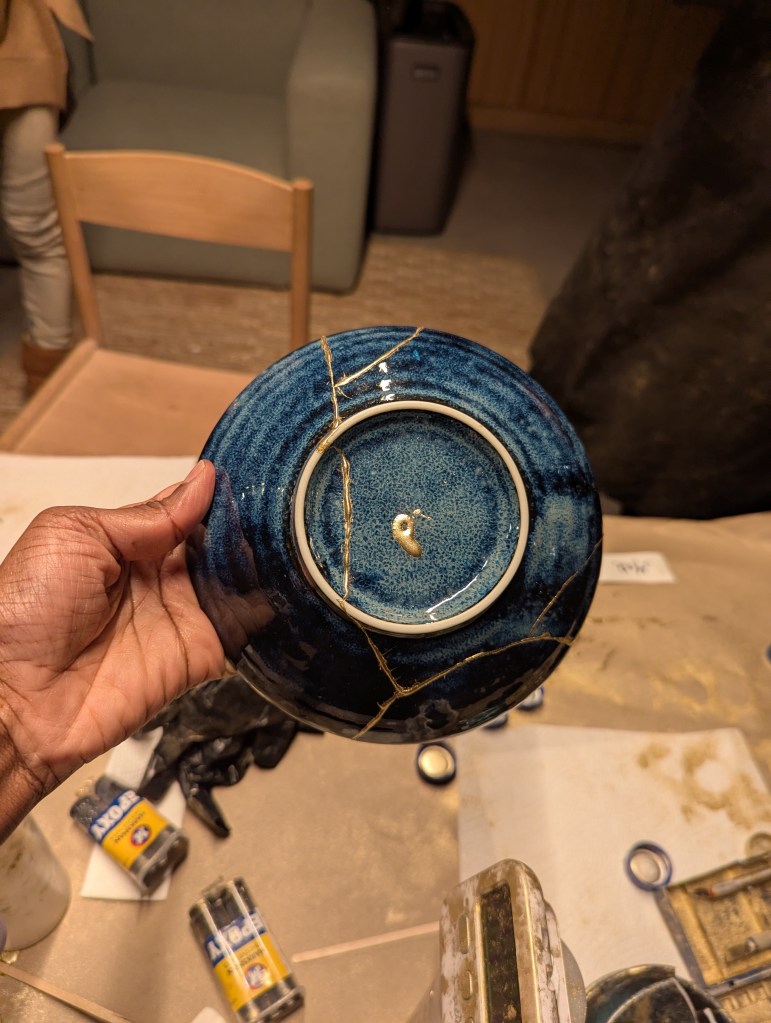
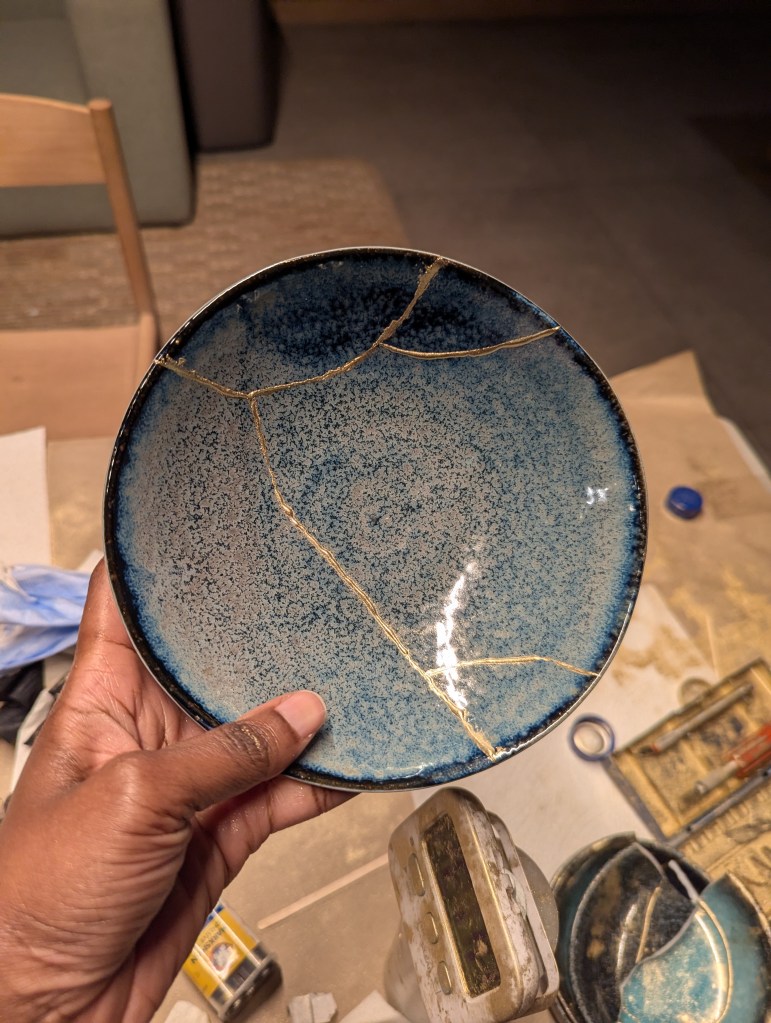
I think of every mistake I’ve made and every challenge I’ve faced and am currently facing – whether at work or in my personal life. The process, the journey, is not easy, but I’m getting through. To give myself some much-needed credit, I’ve done some good and learned things along the way that have helped me with life’s challenges and will help me the next time.
Kintsugi reminded me that in life, the cracks aren’t a failure. They’re evidence of experience. Of adaptation. Of repair. Of accepting who I am, and where I am right now, in this moment. I don’t need to pretend to be seamless and perfect, because in those visible cracks is exactly where the value, the gold, shows up.
 Priscilla Owusu
What are your thoughts?